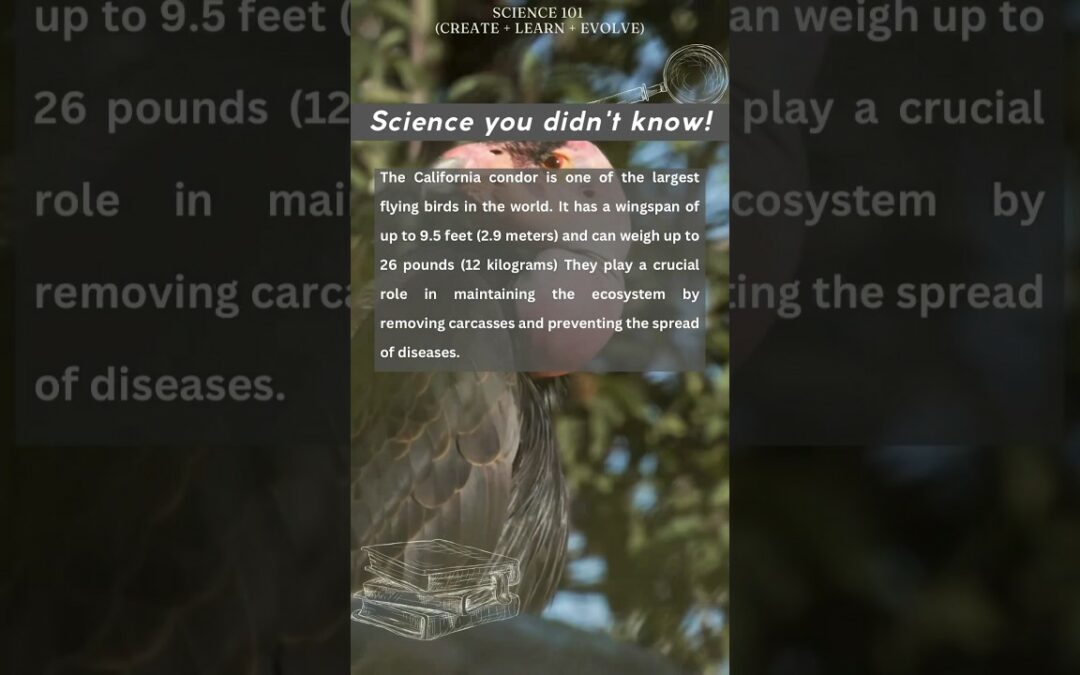
The California condor (Gymnogyps californianus) is a critically endangered species of vulture that is native to the western coastal regions of North America, particularly California. Here are some key aspects of the science and biology of the California condor:
1. Conservation Efforts: The California condor has been the focus of intensive conservation efforts due to its critically endangered status. In the 1980s, the population declined to only 27 individuals, primarily due to factors such as habitat loss, hunting, lead poisoning, and eggshell thinning caused by environmental contaminants. Scientific research plays a crucial role in understanding the species’ biology, behavior, and habitat requirements, which guides conservation initiatives aimed at protecting and recovering the population.
2. Size and Appearance: The California condor is one of the largest flying birds in the world. It has a wingspan of up to 9.5 feet (2.9 meters) and can weigh up to 26 pounds (12 kilograms). The adult condors have black feathers with patches of white underneath their wings and a featherless head that is mostly yellow or reddish-orange. Their distinctive appearance makes them easily recognizable.
3. Feeding Habits: California condors are scavengers, feeding primarily on carrion (dead animals). They play a crucial role in maintaining the ecosystem by removing carcasses and preventing the spread of diseases. Scientists have studied their feeding behavior, foraging patterns, and the ecological impact they have on the environments they inhabit.
4. Breeding and Reproduction: Condors typically form long-term monogamous pair bonds. They nest in cliffs or other suitable locations and lay a single egg, which both parents take turns incubating. The reproductive biology of the California condor has been a subject of scientific investigation, as breeding success and survival rates significantly impact population recovery efforts.
5. Lead Poisoning and Contaminant Exposure: One of the major challenges facing the California condor population is lead poisoning, primarily caused by ingesting lead fragments from ammunition present in the carcasses they feed on. Scientific research has focused on understanding the sources and pathways of lead exposure, evaluating the impacts on individual condors, and informing policies and initiatives to reduce lead exposure in their habitats.
#sciencefacts #condor #californiacondor #california #birdfacts #carrion #conservation #scavenger #homeschool #scienceshorts
Source
