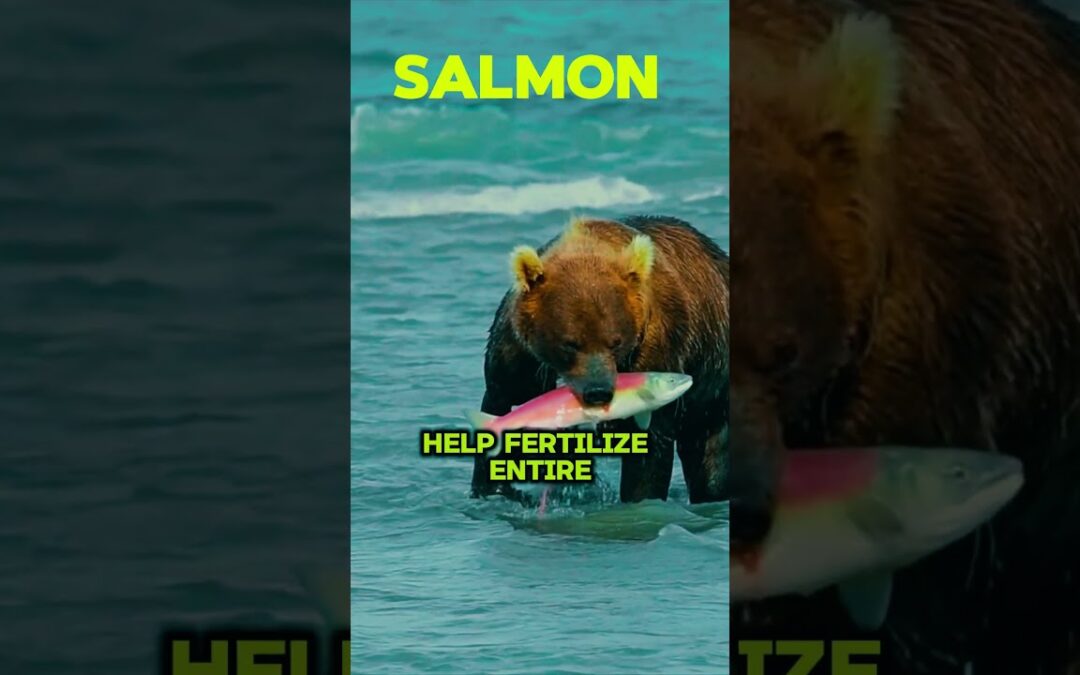
Salmon play an important role in biodiversity conservation, particularly in aquatic and terrestrial habitats. Anadromous fish travel from the ocean to freshwater rivers and streams to reproduce. This life cycle has a profound ecological impact; when salmon return to their spawning areas, they transport critical nutrients from the ocean into freshwater ecosystems. Their rotting bodies nourish a diverse range of organisms, including insects, birds, and mammals, so enriching local ecosystems.
Furthermore, salmon are an important species in the food chain, providing a primary food supply for a variety of predators including bears, eagles, and other wildlife. Their presence promotes healthy fisheries and improves the cultural and economic well-being of the communities that rely on them.
The collapse of salmon populations endangers not only biodiversity but also the livelihoods of those who rely on them for food and income. Conservation activities are critical to protecting their habitats and ensuring the survival of this important species.
#protectwildlife #salmonstrong #nutrientcycling #saveourrivers #savetheturtles #marinelife #natureprotection #biodiversity #ecosystemengineers #wetlands #natureconservation #wildlife #waterquality #protectnature #habitatrestoration #natureeducation #endangeredspecies #biodiversitymatters #amphibiandiversity #natureimportance #marineecosystem #marineenvironmentpollution #marineecosystemsnationalgeographic #biodiversity #marinebiodiversity #ecosystemhealth #oceanconservation #biodiversitydefinition #biodiversityloss #climatechange #climatechange2024 #sustainabletechnologysolutions #sustainabletechnologysolutionsanalyst
Source
