Visit @professorknowbot for the full video. #science #ecosystem #mathematical #biology #education
Hello and welcome to this video about using mathematical representations to support and revise explanations based on evidence about factors affecting biodiversity and populations in ecosystems of different scales.
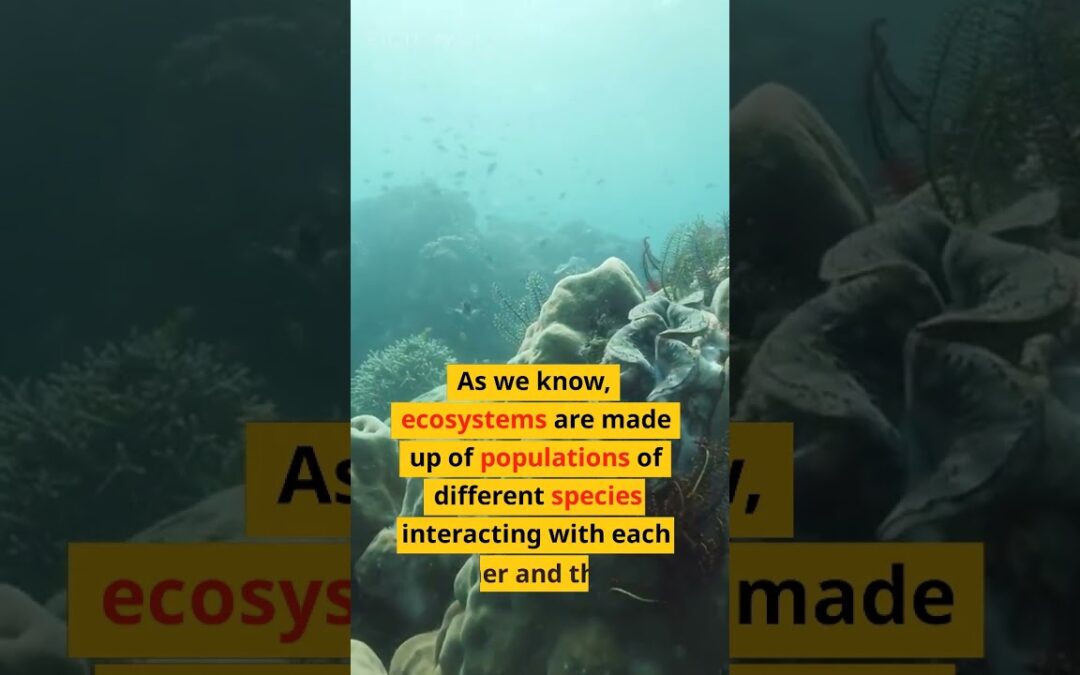
As we know, ecosystems are made up of populations of different species interacting with each other and their environment. There are many factors that can affect biodiversity and populations within an ecosystem, such as predation, competition, disease, climate change, and human activities.
To understand these factors and their impact on ecosystems, scientists use mathematical models and representations. These models can help scientists to identify patterns and relationships between different variables and make predictions about future changes in populations and biodiversity.
One important mathematical representation used in ecology is the population growth model. This model uses mathematical equations to describe how populations change over time based on factors like birth rates, death rates, and immigration and emigration rates. By using this model, scientists can predict how populations will change in response to different factors, such as changes in food availability or habitat destruction.
Another important mathematical representation used in ecology is the food web model. This model uses a series of interconnected arrows to show the relationships between different species in an ecosystem, including predators and prey, and the flow of energy and nutrients through the system. By analyzing the food web model, scientists can understand how changes in one part of the ecosystem can affect other parts of the ecosystem.
Mathematical representations can also be used to study biodiversity within ecosystems. For example, scientists can use species abundance curves to analyze the number of species and the distribution of individuals within those species in a given area. This information can help scientists to understand the diversity and structure of an ecosystem and identify areas that are most vulnerable to changes.
In conclusion, mathematical representations play a crucial role in helping scientists to support and revise explanations about factors affecting biodiversity and populations in ecosystems of different scales. By using these models, scientists can identify patterns, make predictions, and develop more accurate and reliable explanations about the complex relationships that exist within ecosystems. Thank you for watching, and we hope this video has helped you to understand the importance of mathematical representations in ecology.
Source
