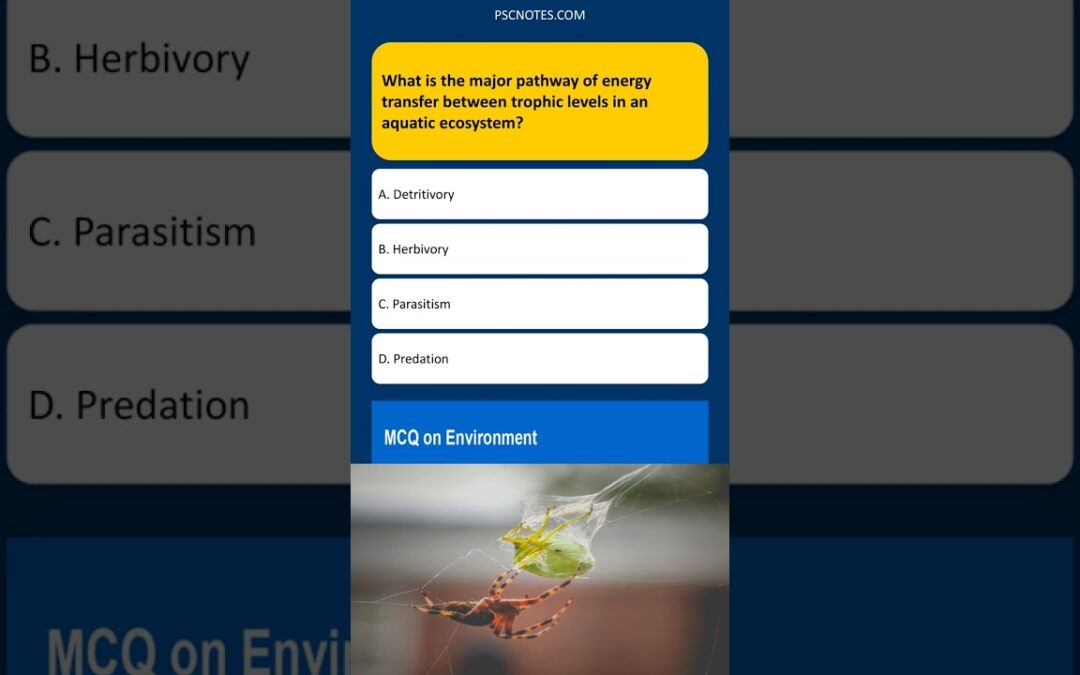
This video dives into the fascinating world of aquatic ecosystems and explores the crucial question: what’s the primary method of energy transfer between different levels of the food chain? We’ll tackle this Multiple Choice Question (MCQ) in a short, engaging format perfect for quick learning and review.
Forget lengthy lectures! This concise video breaks down the concept of trophic levels in aquatic environments, explaining the roles of producers, consumers, and decomposers. We’ll examine the different energy transfer pathways, including grazing food chains and detrital food webs. The video will visually illustrate how energy flows through these pathways, highlighting the key differences and efficiencies involved. We’ll dispel common misconceptions and clarify the most significant pathway responsible for the bulk of energy transfer.
You’ll learn to distinguish between direct consumption and indirect energy transfer through decomposition. By the end of this MCQ short, you’ll be able to confidently answer the question regarding the major pathway of energy transfer in aquatic ecosystems and understand the ecological implications of this process. Prepare for your exams or simply expand your knowledge of aquatic ecology with this informative and easy-to-understand video. Test your understanding with a final MCQ challenge!
#AquaticEcosystem #TrophicLevels #EnergyTransfer #FoodWeb #Ecology #MCQ #Science #Biology #Quiz #Education #EnvironmentalScience #Detritus #Grazing #Producers #Consumers #Decomposers
Predation
Predation is the major pathway of energy transfer between trophic levels in most aquatic ecosystems because it involves the direct consumption of one organism (prey) by another (predator). This transfer of biomass directly moves energy from one trophic level to the next. The predator gains energy from the consumed prey, allowing energy to flow through the food web. While other pathways contribute, predation typically accounts for the largest portion of energy transfer, especially in systems with a significant amount of mobile organisms.
Detritivory is important in processing dead organic matter, but this represents a secondary pathway, recycling energy already transferred through predation or herbivory. Herbivory, while significant in some aquatic systems, doesn’t account for the majority of energy transfer in most, particularly in those with a complex food web involving numerous predators. Parasitism, though a transfer of energy, generally involves smaller amounts of energy transfer compared to the direct consumption of a prey organism in predation. Parasites typically do not consume their hosts completely; they instead extract energy and resources that impact the host’s overall health.
Source
